
Guided implantology
Gentle implantation: less invasive and less demanding.
Digital volume tomography and computer-assisted implantation
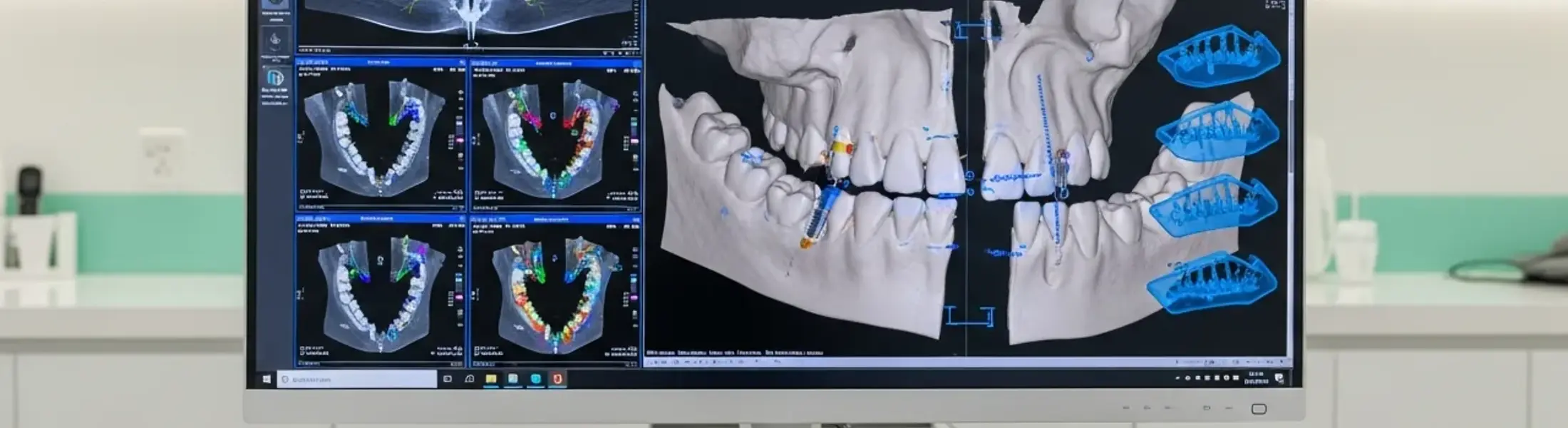
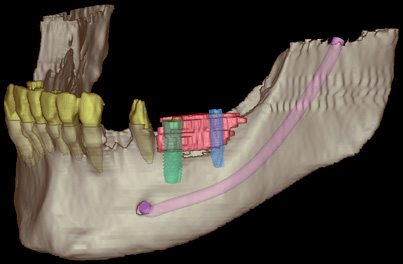
Following an examination with our digital volume tomograph, computer-assisted implantation can be used. The position, angulation and depth of the implant are determined with the help of special planning software. Even before the procedure we obtain a clear picture of the condition of the bone, the position of the nerves and the final implant position.
Based on the individual data from the digital volume tomography and this planning, a virtual 3D model and a patient-specific resin guide are produced. During the operation itself the patient data are transferred to the patient by means of the model. In this way we place implants precisely at the intended positions. Patients generally experience guided implantation as less invasive and less demanding.
3D implant diagnostics
A favourable prognosis even in difficult bone situations
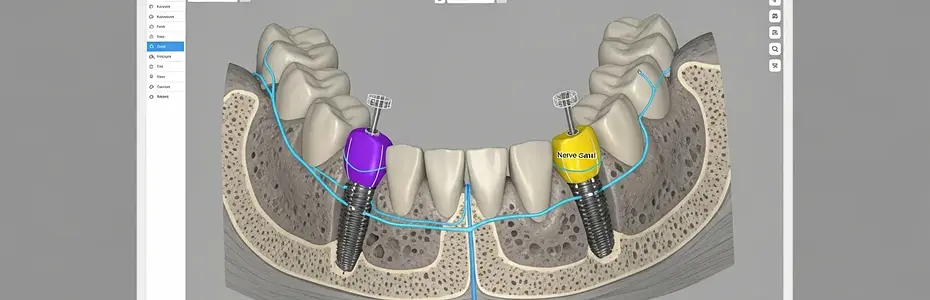
Three-dimensional digital diagnostics support us in planning, in choosing a suitable implant design and in determining the optimal implant position.
On the basis of digital planning we can offer patients implants with a favourable prognosis even in difficult bone situations.
The most important points at a glance
- Digital volume tomography (CBCT) shows the bone, the course of the nerve and the maxillary sinus three-dimensionally.
- The implant position is planned on the computer before the first incision is made.
- A drilling guide transfers the planning precisely into the mouth.
- The procedure can therefore be smaller and is less demanding for patients.