
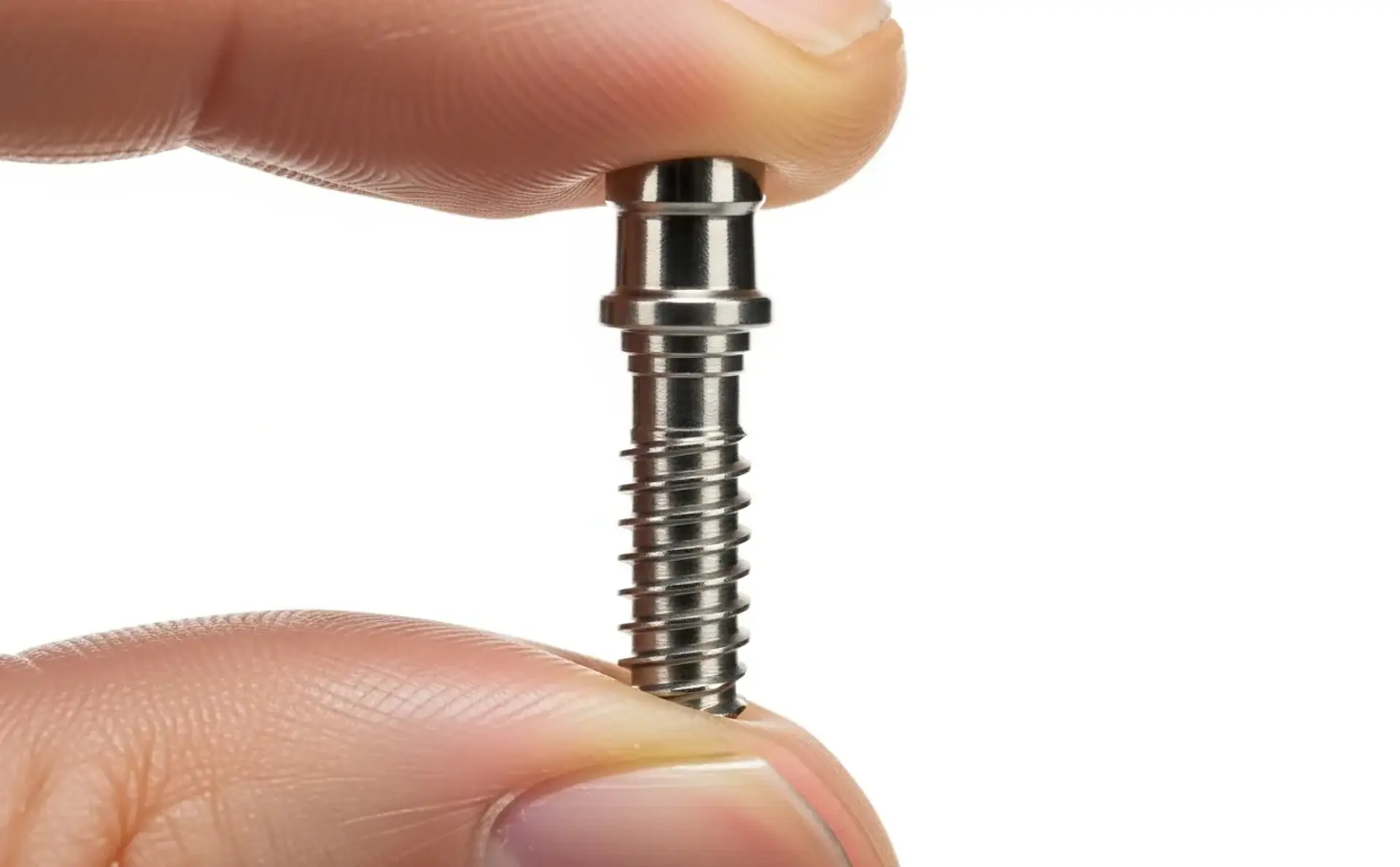
Indications for dental implants
Implants work like natural tooth roots.
An implant-supported solution for almost every situation
Implantology – placing the implants and their subsequent prosthetic restoration – is part of the daily routine at our practice in Frankfurt. We can offer a sensible implant-supported solution for almost every situation.
Where appropriate we use modern, three-dimensional planning procedures. These allow a minimally invasive approach with few complications, which for patients can mean greater treatment comfort and a faster recovery.
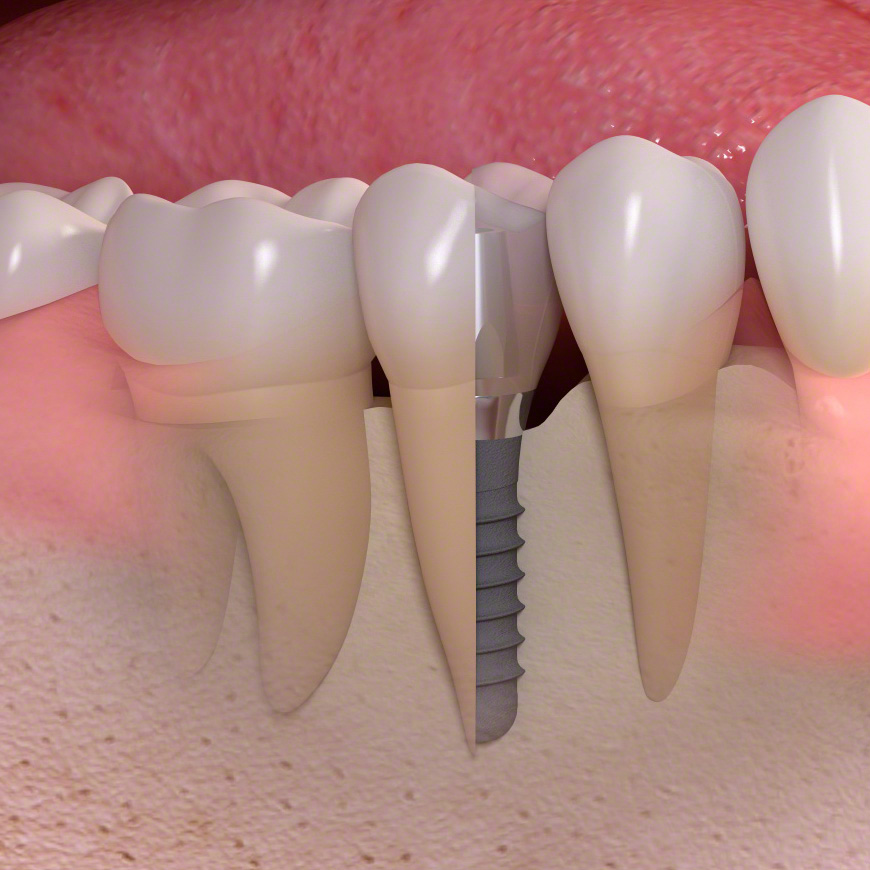
One or more teeth are missing
If one or more teeth are missing, an implant restoration offers an ideal solution for closing the gap. In the visible area of the front teeth, aesthetics are an important aspect: an implant-supported tooth should fit in among your own teeth and finish harmoniously with the gums.
Healthy tooth substance is preserved, since the neighbouring teeth do not have to be ground down to attach an implant-supported bridge or crown. The size of the gap and the respective bone quality determine the number and position of the implants.
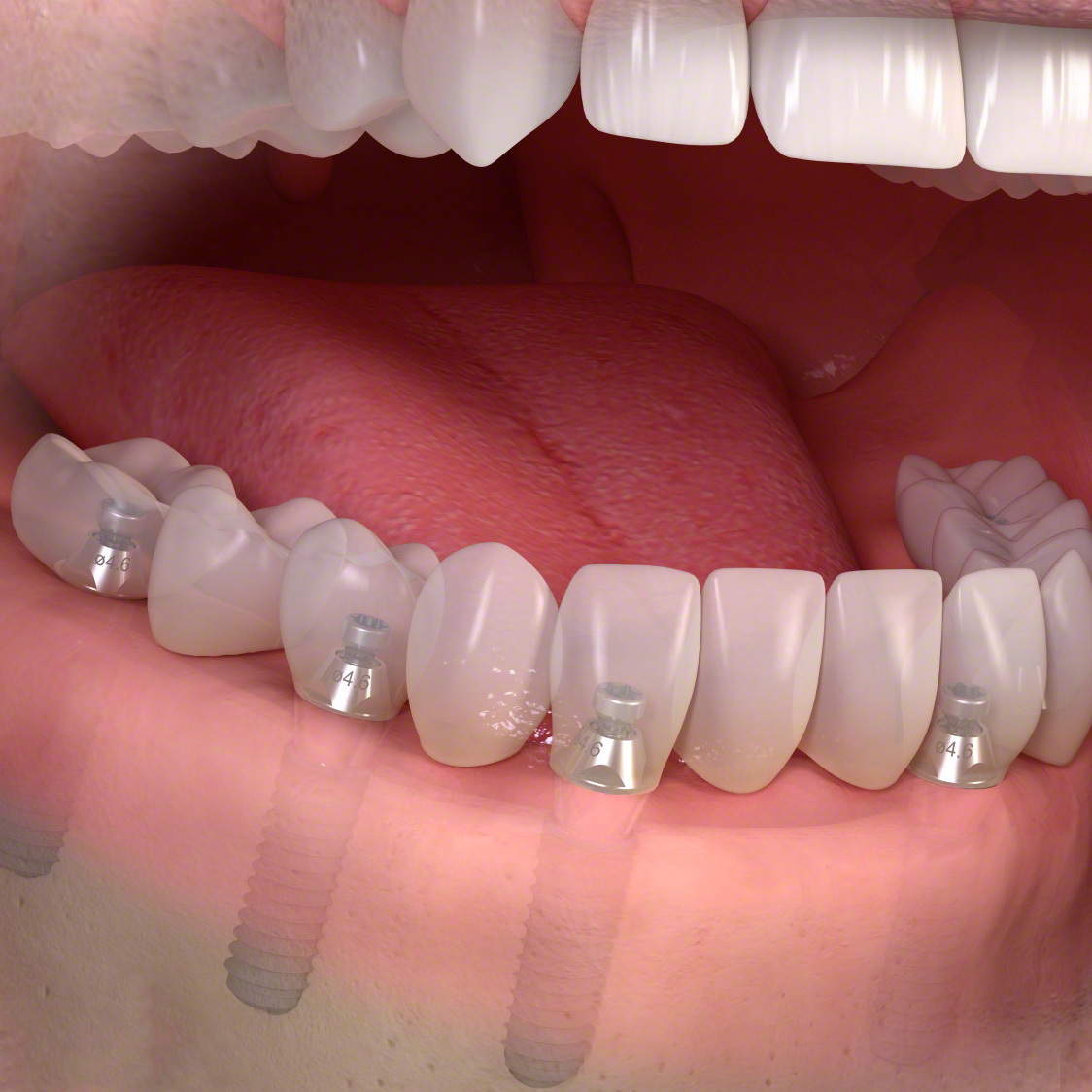
Restoring an edentulous jaw
If all the teeth in the upper or lower jaw are missing, implants can be used to anchor entire artificial rows of teeth in the jaw or to attach removable, implant-supported dentures. These options offer not only aesthetic but also functional advantages over the otherwise usual mucosa-supported denture.
With the implant version the palate remains free of denture material – you can eat, laugh and speak without a care again and enjoy your original sense of taste. Painful pressure points can be avoided with the implant-supported denture, since the denture is held firmly by the implants.
More than restoring the chewing function
Comfort, stability, chewing ability, clarity of speech and ease of cleaning
In edentulous patients in particular, successful implant treatment means more than restoring the chewing function. Being able to bite down firmly again, to speak confidently and to laugh freely gives self-assurance at work, in everyday life and during social activities.
Comparing a conventional denture with an implant-supported one, the implant solution comes off considerably better: in terms of comfort, stability, chewing ability, clarity of speech and ease of cleaning, the implant version promises better results.
The most important points at a glance
- Single tooth gap: an implant with a crown closes the gap without grinding down neighbouring teeth.
- Several missing teeth: implants carry a bridge and avoid a removable partial denture.
- Edentulous jaw: even a few implants can anchor a denture securely.
- Which solution is suitable depends on the available bone, your general health and your wishes.